**Iran Holds Funerals for Officials Larijani and Soleimani**
**TEHRAN** — Iran has held funeral ceremonies for two senior officials, Larijani and Soleimani, in events that drew public attention and official tributes amid a period of heightened political and regional tension.
State-affiliated media reported that mourners, officials and members of the public gathered to pay their respects as the country marked the deaths with formal ceremonies. Iranian leaders described the two men as important figures whose service had shaped the country’s political and security establishment.
### What happened
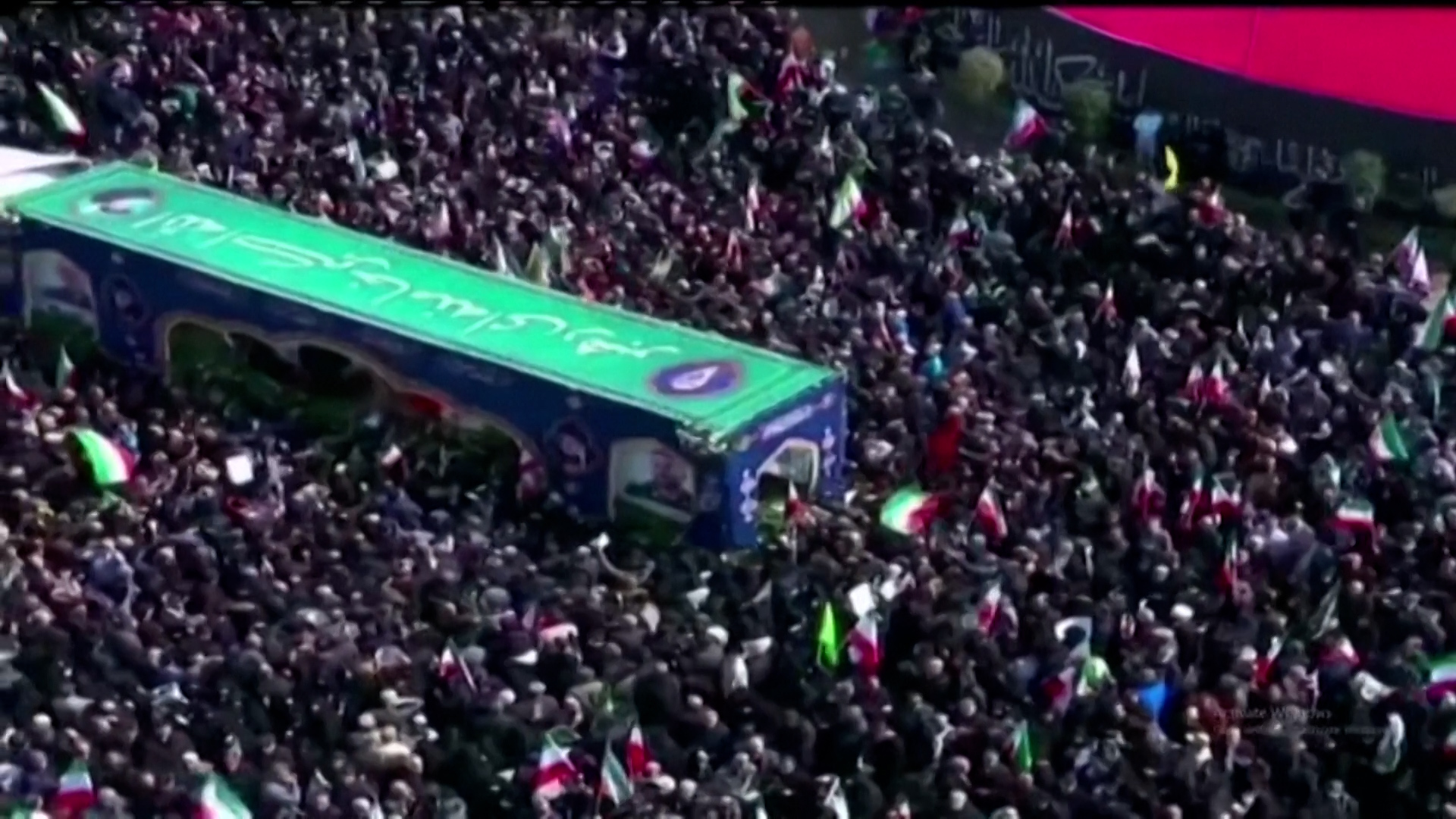
Funeral rites were held in Iran for Larijani and Soleimani, with ceremonies attended by senior state figures, military representatives and supporters. Images broadcast by Iranian media showed crowds taking part in processions and memorial events, while speeches praised the pair’s roles in public service and national affairs.
Authorities used the events to emphasize themes of sacrifice, loyalty and continuity, presenting the funerals as moments of national unity.
### Why it matters
The funerals are significant because both men were associated with powerful parts of Iran’s state structure. Public commemorations of senior officials often serve not only as acts of mourning but also as political signals, reinforcing the authority of the ruling establishment and projecting stability at sensitive moments.
Such ceremonies can also carry regional implications. Iran frequently links the memory of prominent officials and commanders to its broader message of resistance and resilience, especially when tensions with foreign rivals remain high.
### Background
The Larijani family has long been prominent in Iranian politics, with its members holding influential roles across the judiciary, parliament and other institutions. Any funeral involving a figure from that circle is likely to attract close attention inside Iran.
The name Soleimani carries especially heavy symbolic weight in Iran. Qassem Soleimani, the former commander of the Islamic Revolutionary Guard Corps’ Quds Force, was one of the country’s most well-known military figures before he was killed in a U.S. drone strike in Iraq in January 2020. Since then, Iranian officials have repeatedly invoked his legacy as a symbol of national resistance and regional influence.
Funerals for high-profile officials in Iran are often carefully staged public events, blending religious ritual, state ceremony and political messaging. They can become occasions for leaders to rally supporters, honor the dead and underscore continuity within the system.
### Q&A
**Q: Who were Larijani and Soleimani?**
**A:** Iranian media identified them as senior officials whose deaths prompted formal state-backed funeral ceremonies. Larijani is linked to one of Iran’s best-known political families, while the Soleimani name is strongly associated with Iran’s security and military establishment.
**Q: Where were the funerals held?**
**A:** The ceremonies were held in Iran, with public mourning and official participation reported by domestic media.
**Q: Why are the funerals politically important?**
**A:** In Iran, funerals for prominent officials often serve both religious and political purposes. They honor the dead while also reinforcing messages of unity, legitimacy and continuity from the state.
**Q: Does the Soleimani name have wider significance?**
**A:** Yes. The name is deeply tied to Iran’s regional posture and to the legacy of Qassem Soleimani, who remains a central symbol in official rhetoric.
**Q: What could happen next?**
**A:** Iranian leaders may continue to use memorial events and public statements tied to the funerals to highlight national solidarity and underscore the importance of the institutions the two men represented.