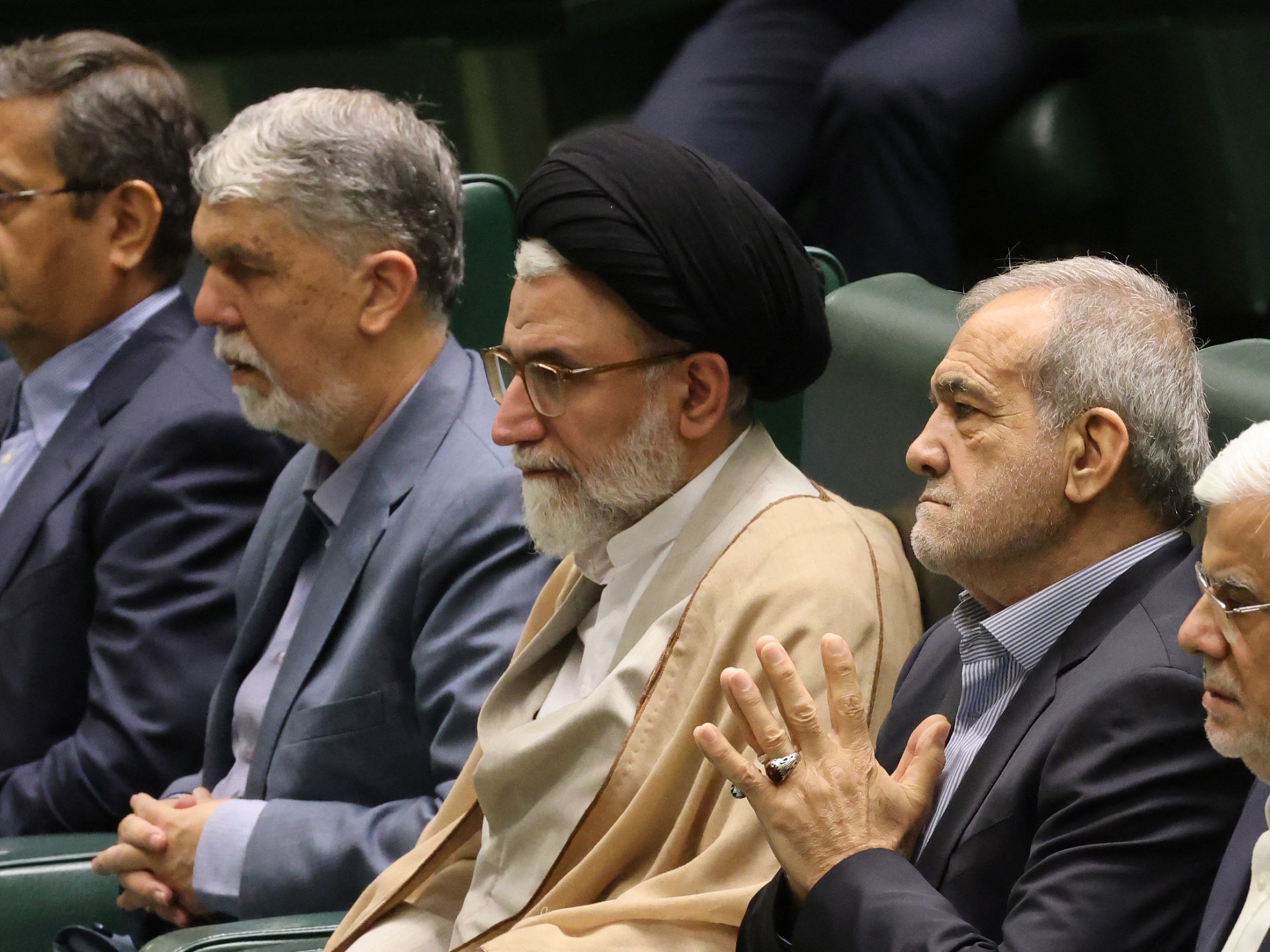
**Israel says it killed Iranian intelligence chief Khatib**
**JERUSALEM —** Israel said it had killed Iran’s intelligence chief, Esmail Khatib, in a major escalation that could deepen already severe tensions between the two regional adversaries.
Israeli officials announced the killing on [date not immediately independently confirmed], saying Khatib, one of Iran’s most senior security figures, had been targeted in an Israeli operation. Iranian authorities did not immediately confirm the claim, and there was no independent verification of Khatib’s death at the time of reporting.
If confirmed, the killing would mark one of the most significant direct blows against Iran’s security establishment in recent years, potentially prompting retaliation from Tehran and raising fears of a wider regional confrontation.
## What happened
According to Israeli statements, Khatib was killed in what officials described as a targeted operation. Israel did not immediately release detailed information about where or how the attack took place.
Khatib has served as Iran’s intelligence minister, a key role overseeing domestic intelligence, counterintelligence and internal security operations. His office has long been linked by Israel and Western governments to efforts to monitor dissidents, counter foreign espionage and project Iranian influence abroad.
The claim comes amid heightened confrontation between Israel and Iran, including covert operations, airstrikes, cyberattacks and proxy conflicts across the Middle East.
## Why it matters
The reported killing matters for several reasons:
– **Major symbolic and operational blow:** As intelligence minister, Khatib is a high-value figure in Iran’s security apparatus. His death would be a serious loss for Tehran.
– **Risk of retaliation:** Iran has repeatedly vowed to respond to attacks on its senior officials, military commanders and nuclear personnel.
– **Potential for escalation:** Direct or indirect retaliation could target Israeli interests, allies, or regional shipping routes, drawing in other countries.
– **Impact on intelligence operations:** If confirmed, the killing could disrupt Iranian intelligence coordination at a sensitive time for the region.
The development also underscores how the shadow war between Israel and Iran has increasingly moved into the open. What was once largely confined to covert actions has in recent years included more visible military strikes and public threats.
## Background
Israel and Iran have been locked in a long-running conflict driven by Iran’s nuclear program, Tehran’s support for armed groups hostile to Israel, and Israeli efforts to prevent Iran from expanding its military footprint in the region.
Israel has for years accused Iran of arming and funding groups such as Hezbollah in Lebanon, Hamas in Gaza and other allied militias in Syria, Iraq and elsewhere. Iran, for its part, says its regional posture is aimed at deterrence and resistance against Israel and the United States.
Senior Iranian figures have previously been targeted in assassinations and military strikes that Tehran has often blamed on Israel, though Israeli officials have not always publicly acknowledged involvement.
Khatib, as intelligence minister, was viewed as a central figure in Iran’s internal security system. His ministry has played a major role in surveillance, anti-espionage activity and crackdowns on dissent.
## Uncertainty remains
There are still major unanswered questions, including whether Khatib was in Iran or abroad when he was allegedly killed, what method was used, and whether others were killed alongside him.
Given the high stakes, analysts are watching closely for an Iranian response, as well as any confirmation from Tehran, state media or other governments.
## Q&A
**Q: Who is Esmail Khatib?**
**A:** Khatib is Iran’s intelligence minister, one of the country’s top security officials responsible for intelligence and internal security matters.
**Q: What has Israel claimed?**
**A:** Israel says it killed Khatib in a targeted operation, though details remain limited.
**Q: Has Iran confirmed his death?**
**A:** At the time of reporting, there was no immediate independent confirmation and no clear Iranian confirmation.
**Q: Why is this significant?**
**A:** Because Khatib is a senior figure in Iran’s security apparatus, and his reported killing could trigger retaliation and intensify regional conflict.
**Q: What could happen next?**
**A:** Iran could deny the claim, confirm it and vow retaliation, or respond through military, intelligence, cyber or proxy actions. Regional tensions are likely to remain high.
**Q: How does this fit into the broader Israel-Iran conflict?**
**A:** It reflects the long-running shadow war between the two countries, which has involved assassinations, airstrikes, cyberattacks and proxy battles across the Middle East.
Officials in Israel and Iran are expected to face mounting international scrutiny as more information emerges. For now, the claim adds another volatile chapter to one of the region’s most dangerous rivalries.