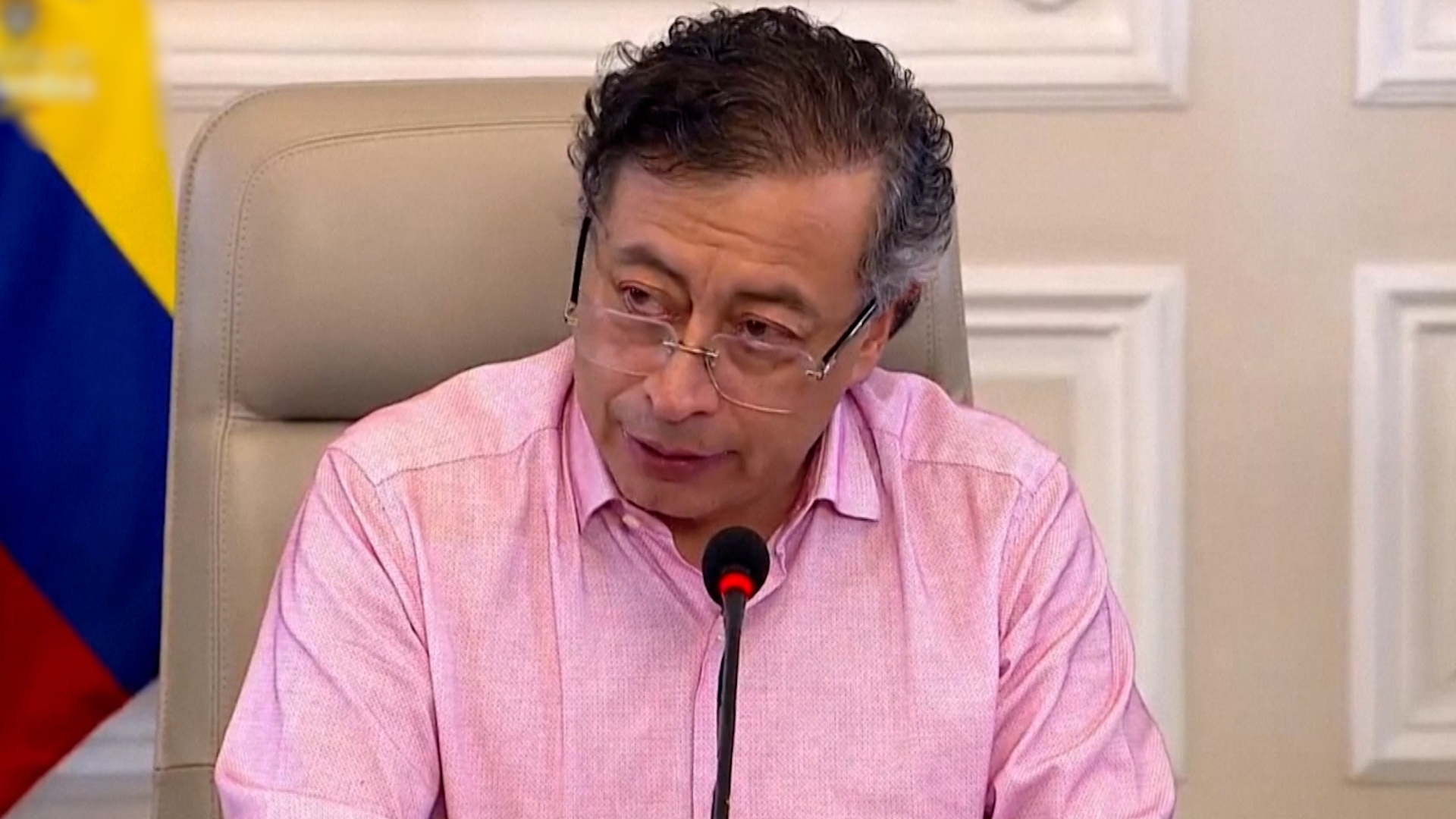
**Colombian President Says Gaza Was an ‘Experiment’ for Wider Destruction**
**BOGOTÁ** — Colombian President Gustavo Petro said Gaza had been used as an “experiment” for broader forms of destruction, in remarks that sharply criticized Israel’s military campaign and linked the war in the Palestinian territory to wider global risks.
Petro made the comments as international concern continues to grow over the humanitarian toll of the conflict in Gaza, where Israeli operations following Hamas’s October 2023 attack have caused massive devastation, displacement and civilian casualties. His statement adds to a long line of strong condemnations from the Colombian leader, who has emerged as one of Latin America’s most outspoken critics of Israel’s conduct in the war.
### What happened
Petro said Gaza was effectively an “experiment” in methods of destruction that could later be applied elsewhere, framing the conflict not only as a regional humanitarian catastrophe but also as a warning to the world. The remarks were consistent with his previous rhetoric accusing Israel of disproportionate violence against Palestinians.
Although Petro has repeatedly denounced Hamas attacks as well as Israeli military actions, his harshest criticism has been directed at Israel’s offensive in Gaza. Colombia under Petro has downgraded diplomatic ties with Israel and taken a more confrontational position than many other governments in the region.
His latest comments come amid continuing international debate over the legality and morality of the war, with rights groups, U.N. agencies and several governments warning of possible war crimes, the destruction of civilian infrastructure and severe restrictions on aid.
### Why it matters
Petro’s remarks matter for several reasons.
First, they underscore how the Gaza war has become a major issue far beyond the Middle East, shaping diplomacy in Latin America, Europe and other regions. Colombia is one of the most prominent countries in South America, and its president’s language may deepen pressure on other governments to clarify their own positions.
Second, the comments reflect a broader argument increasingly heard among critics of the war: that Gaza is not only a site of immense suffering, but also a test case for new military, surveillance and control practices in densely populated civilian areas.
Third, Petro’s words could further strain Colombia’s already damaged relationship with Israel. Ties between the two countries have deteriorated significantly under his administration, affecting diplomatic engagement and potentially cooperation in defense and trade.
Finally, the statement feeds into the wider global dispute over accountability. As international courts and U.N. bodies examine allegations tied to the conflict, rhetoric from influential leaders can shape public opinion and diplomatic momentum.
### Background
The war in Gaza began after Hamas-led militants attacked Israel on Oct. 7, 2023, killing about 1,200 people, according to Israeli tallies, and taking hostages into Gaza. Israel responded with a large-scale military offensive aimed at destroying Hamas.
Since then, Gaza has suffered extensive bombardment, ground operations and the collapse of much of its civilian infrastructure. Health authorities in Gaza have reported tens of thousands of deaths, while aid organizations have warned of hunger, displacement and the destruction of hospitals, schools and homes.
Petro has been among the strongest international voices condemning Israel’s campaign. He has previously compared conditions in Gaza to historical atrocities and has accused the Israeli government of carrying out collective punishment. His statements have drawn praise from pro-Palestinian groups and criticism from Israeli officials and others who say his rhetoric is inflammatory.
Colombia and Israel historically maintained close ties, including defense cooperation. But relations worsened rapidly after Petro took office and became more vocal on the Palestinian issue.
### Q&A
**Q: What did President Gustavo Petro say?**
A: He said Gaza had been used as an “experiment” for wider destruction, suggesting the methods seen there could be replicated elsewhere.
**Q: What was he referring to?**
A: Petro was referring to the scale of destruction and civilian suffering caused by Israel’s military campaign in Gaza after the Hamas-led attack on Israel in October 2023.
**Q: Why is this statement significant?**
A: It highlights Colombia’s increasingly forceful criticism of Israel, adds to international pressure over the war, and frames Gaza as a global warning rather than only a regional conflict.
**Q: How has Israel responded to criticism like this in the past?**
A: Israeli officials have generally rejected such accusations, saying their military campaign is aimed at defeating Hamas and securing the release of hostages, while arguing that Hamas operates from civilian areas.
**Q: What is Colombia’s position under Petro?**
A: Petro’s government has taken a strongly pro-Palestinian stance, sharply criticized Israel’s military actions and reduced the warmth of bilateral relations.
**Q: Why does the “experiment” remark resonate internationally?**
A: Because it taps into fears that tactics used in Gaza — including large-scale bombardment, siege conditions and surveillance-heavy warfare — may influence future conflicts worldwide.
As the war continues, Petro’s remarks are likely to reinforce already intense international divisions over Gaza, the conduct of Israel’s campaign, and the broader implications of the conflict for global norms on war and civilian protection.