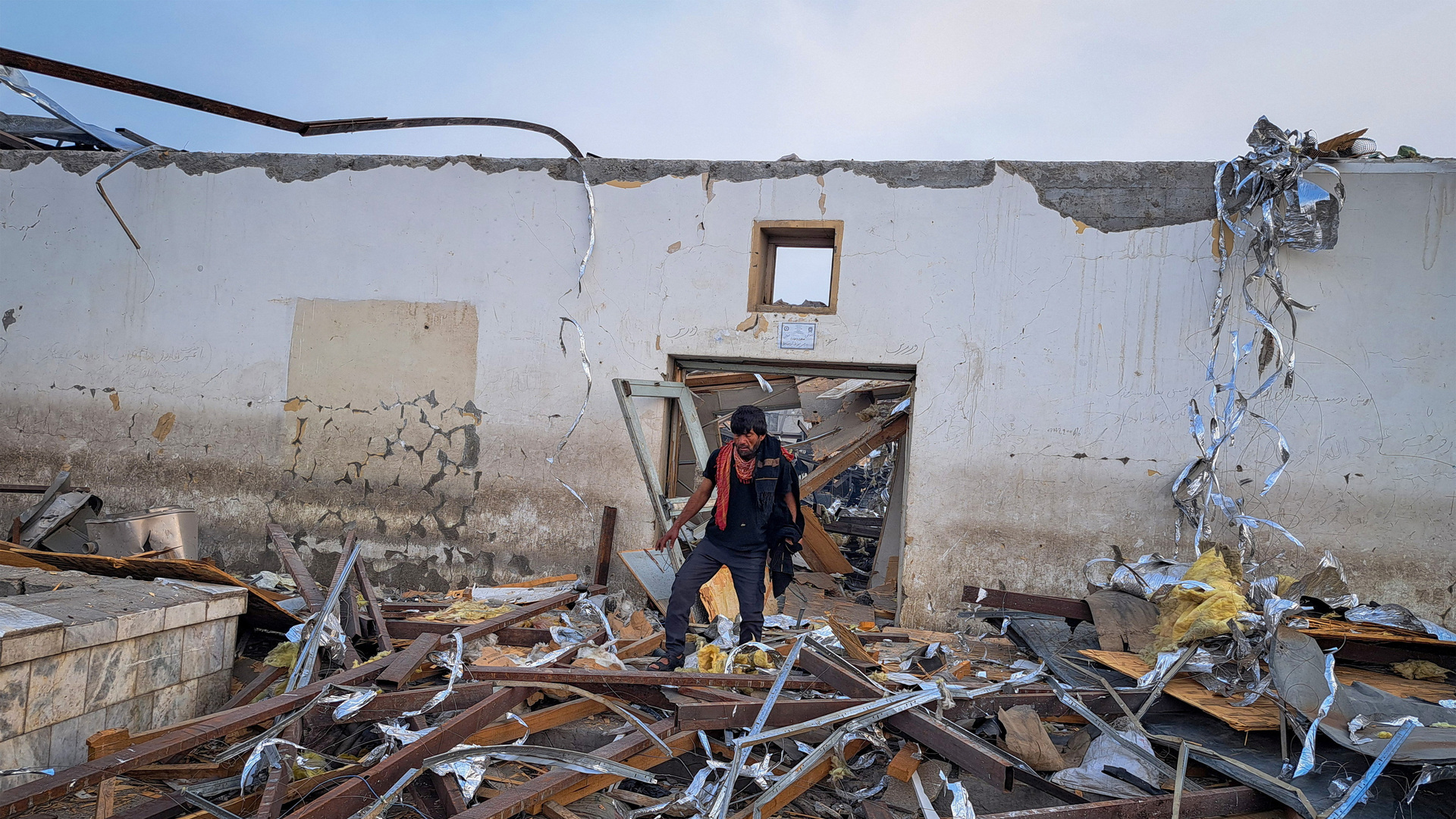
# Families search for loved ones after deadly attack on Kabul hospital
**KABUL, Afghanistan** — Desperate families gathered outside a Kabul hospital and at nearby morgues on Tuesday, searching for relatives after a deadly attack turned a medical facility into a scene of chaos, grief and fear.
Witnesses said gunfire and explosions struck the hospital compound, sending patients, doctors and visitors scrambling for safety. By evening, officials had confirmed multiple deaths and injuries, though the exact toll remained unclear as security forces swept the area and hospitals struggled to identify victims.
Relatives crowded entrances, clutching identity cards and photos, asking staff for news of missing family members. Some moved from ward to ward, while others checked lists of the wounded or the dead.
“We have been looking for him for hours,” one man said outside the hospital, saying his brother had gone there for treatment earlier in the day and never returned. “No one can tell us where he is.”
## What happened
According to Afghan officials and witnesses, attackers targeted a hospital in Kabul in a coordinated assault involving gunfire and blasts. Emergency responders rushed casualties to nearby treatment centers as security forces moved in to confront the assailants and clear the building.
Authorities said the attackers struck a place that would normally be considered protected under international humanitarian norms. The full sequence of events was still under investigation, and officials had not immediately released details on the number of attackers or whether any group had claimed responsibility.
The attack caused panic among patients and staff, many of whom were already among the country’s most vulnerable. Hospital corridors reportedly filled with smoke and debris, and some survivors said they hid in rooms or tried to escape through windows and side exits.
## Why it matters
The attack underscores the deep insecurity that continues to haunt Afghanistan, even in places meant for care and refuge. Hospitals are critical lifelines in a country where years of war have left the health system under severe strain.
Striking a medical facility carries consequences beyond the immediate death toll. It can deter people from seeking treatment, traumatize health workers, and weaken already fragile public confidence in the state’s ability to provide security.
For families, the impact is intensely personal. In the aftermath, many were left not only grieving but also struggling to learn whether loved ones had survived. In mass-casualty attacks, confusion over hospital transfers, poor communications, and limited record-keeping often deepen the suffering.
## Background
Kabul has long been the target of high-profile attacks by militant groups seeking to destabilize the government, spread fear and demonstrate their reach. Civilian sites, including schools, mosques, government buildings and medical centers, have all been hit over the years.
Hospitals have special significance because they are places where civilians expect safety regardless of politics or conflict. Attacks on health facilities have drawn repeated condemnation from Afghan authorities, aid organizations and international governments, who say such strikes may amount to serious violations of international law.
Afghanistan’s health sector has faced years of pressure from conflict, underfunding, staff shortages and waves of casualties from bombings and shootings. Any attack on a major hospital can ripple through the wider system, disrupting surgeries, emergency care and access to essential medicine.
## Search for the missing
As night fell, the search for survivors continued. Ambulances moved in and out of the area while security personnel guarded entrances. Inside, medical workers worked under extreme pressure, trying to treat the wounded and identify the dead.
Outside, the human cost of the attack came into sharper focus. Families waited for names to be posted, called relatives repeatedly, and questioned anyone emerging from the hospital.
Some found loved ones injured. Others feared the worst.
“We only want information,” said one woman waiting outside a nearby clinic after hearing her daughter may have been transferred there. “If she is alive, tell us. If she is dead, tell us. We cannot remain like this.”
## Q&A
**Q: What happened in Kabul?**
A: Attackers targeted a hospital in Kabul, using gunfire and explosions. The assault killed and injured multiple people and left families searching for missing relatives.
**Q: Who was affected?**
A: Patients, doctors, hospital staff, visitors and nearby civilians were caught up in the attack. Families of those inside were left scrambling for information.
**Q: Why is this significant?**
A: Hospitals are supposed to be protected spaces. An attack on a medical facility not only causes immediate casualties but also damages public trust and strains an already fragile health system.
**Q: Do authorities know who carried out the attack?**
A: Officials were investigating, and responsibility was not immediately clear in the early aftermath.
**Q: What happens next?**
A: Authorities are expected to continue investigating the assault, confirm casualty figures and work to identify victims, while hospitals try to care for the wounded and reconnect families with missing relatives.