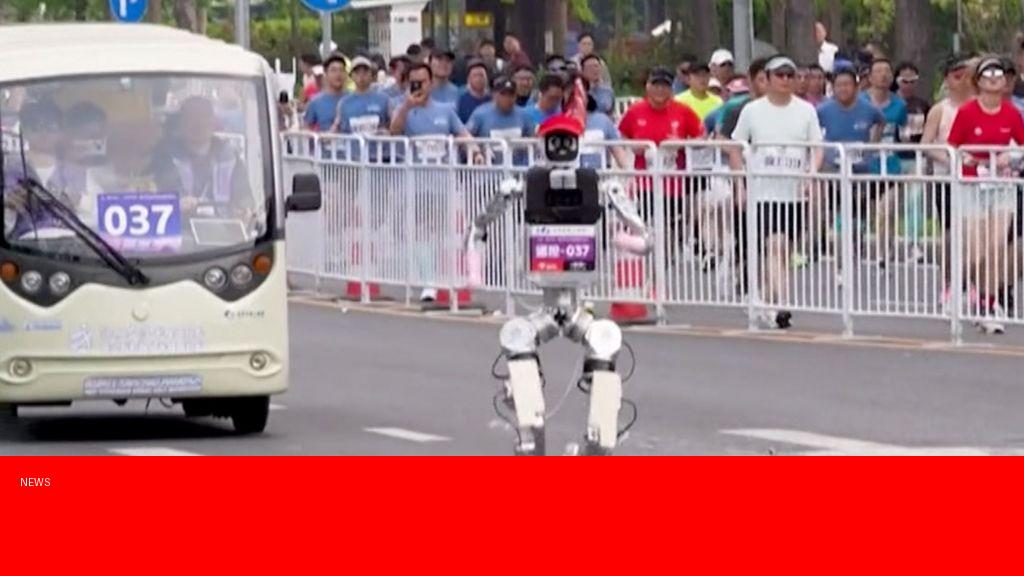
What happened
In a unique sporting event held in China, human runners competed alongside advanced robots during a half marathon. The race featured participants navigating the customary 21.1-kilometer distance, while several autonomous and semi-autonomous robots joined the competition, showcasing cutting-edge technology in real-time athletic performance. Spectators watched as robots maintained competitive pacing, adapting to terrain and conditions much like their human counterparts.
Why it matters
This event represents a significant milestone in the integration of robotics into everyday human activities, particularly in sports and fitness. By pitting humans against robots in a challenging endurance race, developers could benchmark robotic capabilities in mobility, endurance, and environmental interaction. The event also ignites public interest and dialogue about the future of human-robot collaboration and competition, highlighting technological advancements that may impact industries ranging from athletics to healthcare and transportation.
Background
Robotics technology has advanced rapidly in recent years, with improvements in artificial intelligence, sensor technology, and battery life allowing robots to operate competently in complex environments. China has been at the forefront of many such innovations. Incorporating robots into a half marathon event builds on earlier experiments with robotic participation in various sports. This race is part of broader efforts to understand how robots can coexist and compete with humans in physical challenges, pushing the boundaries of both athleticism and machine learning.
Questions and Answers
Q: What types of robots participated in the marathon?
A: The marathon featured several types of robots, including humanoid robots and wheeled autonomous machines, all designed to demonstrate endurance and adaptive navigation over the course.
Q: Did any robot win or outperform the human runners?
A: While robots showed impressive performance and endurance, human runners outpaced the machines, highlighting the current limits of robotic mobility in dynamic environments.
Q: What technology enables these robots to run alongside humans?
A: These robots utilize advanced AI algorithms, real-time environment sensing using LIDAR and cameras, and enhanced battery systems to maintain speed and balance throughout the race.
Q: Will this event lead to more competitions featuring robots?
A: Organizers and technology experts anticipate more events combining human and robotic participants to foster innovation and public engagement with robotics.
Q: How can this technology impact everyday life?
A: Advancements demonstrated in the marathon have potential applications in fields such as search and rescue, elderly assistance, and delivery services, where robots must navigate complex environments continuously.
Source: https://www.bbc.com/news/videos/cz0e54yrppno?at_medium=RSS&at_campaign=rss